Optimizing LoRaWAN Firmware for Soil Moisture Sensors in Precision Agriculture
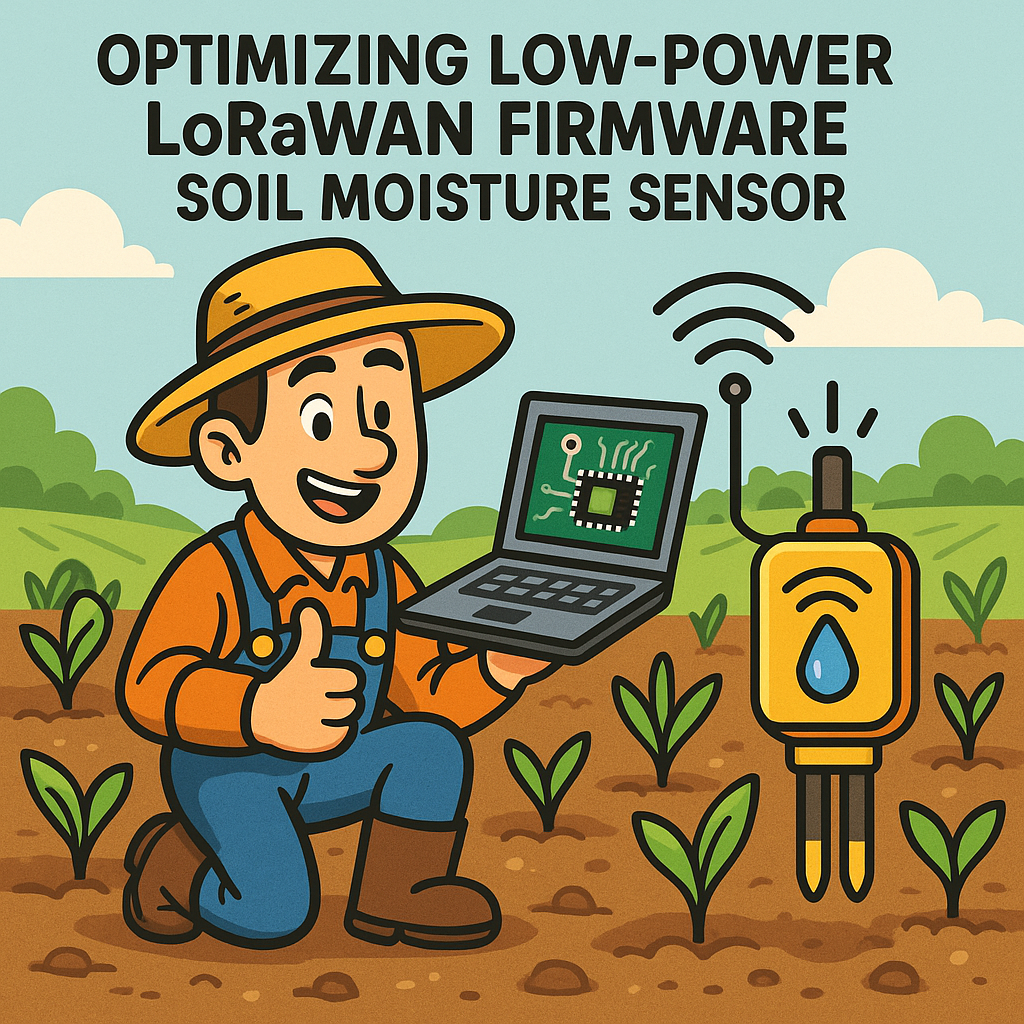
Understanding the Role of LoRaWAN in Soil Moisture Monitoring
In the realm of precision agriculture, soil moisture sensors play a pivotal role in managing irrigation effectively. These sensors collect critical data that informs farmers when and how much to water their crops, directly influencing yield and resource efficiency. However, when deploying these sensors, especially in remote areas, power consumption becomes a significant concern. This is where Low Power Wide Area Network (LoRaWAN) technology shines, providing long-range communication capabilities while maintaining low energy usage. But optimizing the firmware for such systems is not without its challenges.
The Challenge of Power Consumption
Soil moisture sensors equipped with LoRaWAN must operate for extended periods on limited power sources, often battery-operated. The challenge lies in balancing the need for frequent data transmission with the energy constraints of the device. Typically, a soil moisture sensor will sample the soil and transmit data at regular intervals. However, the power required for the RF transmission can significantly deplete battery life if not managed correctly.
Design Trade-offs in Firmware Development
When developing firmware for these sensors, engineers face several design trade-offs. For instance, increasing the transmission frequency yields more up-to-date information but also consumes more power. Conversely, reducing the sample rate can preserve battery life but may lead to missed critical irrigation opportunities, especially during dry spells. The solution often lies in a hybrid approach: implementing adaptive sampling strategies that adjust the frequency of readings based on environmental conditions.
Adaptive Sampling Algorithms
Adaptive sampling algorithms are key to optimizing power consumption in soil moisture sensors. One effective approach is to use soil moisture thresholds; if the moisture level is above a certain threshold, the sensor can reduce its sampling frequency. Conversely, if moisture levels drop below this threshold, the sensor can increase its sampling rate to provide timely data for irrigation decisions. This not only conserves battery life but also ensures the data transmitted is relevant and actionable.
Hardware Considerations for Low Power Operation
Hardware selection is equally critical in the quest for low power consumption. Choosing the right microcontroller (MCU) is essential; options like the STM32L series or the Texas Instruments MSP430 are designed for ultra-low power applications. These MCUs often feature sleep modes that can drastically reduce power usage when the sensor is idle. Additionally, integrating a low-power radio module that supports LoRaWAN, such as the Semtech SX1276, allows for effective communication over long distances with minimal energy expenditure.
Power Management Techniques
Implementing effective power management techniques is crucial. For instance, using a combination of duty cycling and deep sleep modes can significantly extend battery life. In duty cycling, the sensor wakes up, takes a reading, transmits data, and then returns to sleep. Utilizing interrupts to trigger wake cycles based on external events, like changes in moisture levels, can further optimize power usage. Moreover, using energy harvesting solutions, such as solar panels or piezoelectric generators, can provide additional power to supplement the battery, ensuring longer operational lifespans.
Real-World Design Decisions
In practice, engineers must consider the deployment environment of the sensors. For instance, sensors installed in shaded areas may require different power strategies compared to those exposed to direct sunlight. Furthermore, the choice of enclosure can impact temperature and humidity levels, which in turn affects sensor readings and battery performance. Therefore, environmental assessments are crucial during the design phase to ensure that the firmware can adapt based on real-world conditions.
Conclusion: The Path Forward
Optimizing low-power LoRaWAN firmware for soil moisture sensors is a balancing act of hardware selection, algorithm efficiency, and environmental considerations. As precision agriculture continues to evolve, the integration of smarter, more efficient sensor technology will be crucial in achieving sustainable farming practices. By investing in robust firmware strategies and embracing innovative power management techniques, engineers can contribute significantly to the future of agriculture — one low-power sensor at a time.