Understanding the Role of Real-Time Executors in ROS 2
As we venture into the world of autonomous agricultural drones, the utilization of Robot Operating System 2 (ROS 2) becomes crucial. One of the standout features of ROS 2 is its ability to support real-time systems through the use of real-time executors. However, implementing these executors on low-power microcontrollers presents significant challenges that we must navigate carefully.
Challenges of Low-Power Microcontrollers
Low-power microcontrollers are ideal for agricultural drones due to their lightweight design and energy efficiency. However, they come with limitations in processing power and memory, which complicate the execution of complex algorithms required for real-time navigation. The primary challenge here is managing the trade-off between computational demand and resource availability. For example, while the navigation stack in ROS 2 requires substantial computational resources, the microcontroller must remain responsive to sensor inputs to ensure safe and effective navigation.
Choosing the Right Hardware
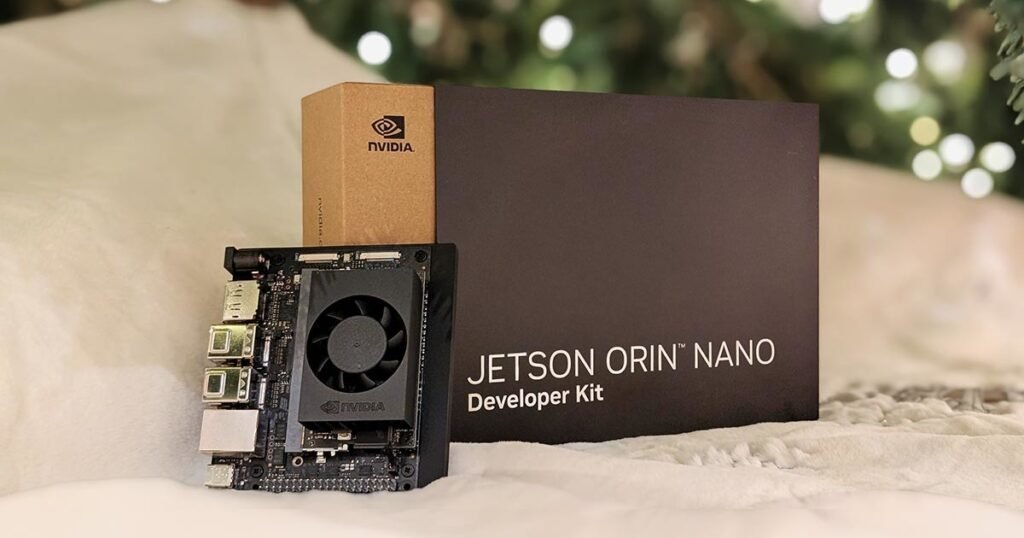
When selecting hardware, the choice of microcontroller is paramount. Microcontrollers like the STM32 series or the ESP32 offer a balance between processing capability and power consumption. The STM32F4, for instance, features a Cortex-M4 core, providing a floating-point unit which is advantageous for complex calculations involved in navigation algorithms. Additionally, the inclusion of real-time clock and PWM signals enhances the drone’s ability to manage tasks like motor control and sensor data acquisition effectively.
Implementing Real-Time Executors
With the hardware in place, the next step is implementing the real-time executors in ROS 2. The real-time executor is designed to ensure that tasks are executed within a guaranteed time frame, which is essential for the timely processing of sensor data. This is particularly critical in a dynamic environment like agriculture, where conditions can change rapidly.
In practice, this means configuring the executor to manage multiple nodes efficiently. For instance, you might have a dedicated node for processing GPS data and another for obstacle detection using Lidar. By prioritizing these nodes within the executor, you can ensure that critical tasks receive the necessary CPU cycles, thus maintaining responsiveness.
Algorithm Optimization and Trade-offs
Algorithm optimization is another layer of complexity. In a typical drone navigation scenario, algorithms such as SLAM (Simultaneous Localization and Mapping) or PID controllers are used to navigate and stabilize the drone. However, running these algorithms on low-power hardware necessitates a careful balance between accuracy and computational load.
For instance, you could simplify the SLAM algorithm by reducing the number of features detected, which saves processing time but may lead to less accurate positioning. Alternatively, implementing a Kalman filter can smooth out sensor noise without overburdening the processor. Each decision here must consider the specific operational environment and mission requirements, such as the size of the field and the types of crops being monitored.
Firmware Considerations
Firmware plays a crucial role in enabling real-time performance. Using FreeRTOS or similar real-time operating systems can facilitate task scheduling and prioritization on microcontrollers. This allows for the efficient handling of interrupts from sensors while ensuring that the main control loop remains responsive. Additionally, careful memory management is essential; using techniques like memory pools can mitigate fragmentation, ensuring that the system remains stable over long durations of operation.
Real-World Design Trade-offs
In the field, various trade-offs come into play. For example, increasing the sampling rate of sensors can lead to better data granularity but at the cost of higher power consumption. As such, engineers must develop a strategy for adaptive sampling, where the drone adjusts its sensor frequency based on current environmental conditions or mission objectives. Balancing these design considerations is key to developing an efficient and effective autonomous drone for agriculture.
Ultimately, the integration of ROS 2 real-time executors within low-power microcontrollers for agricultural drone navigation is a complex challenge. However, with careful consideration of hardware, firmware, algorithms, and design trade-offs, it is possible to create a robust system that enhances the efficiency and effectiveness of agricultural practices.