Enhancing Battery Life in Smart Fitness Trackers with Adaptive Sleep Modes in Firmware
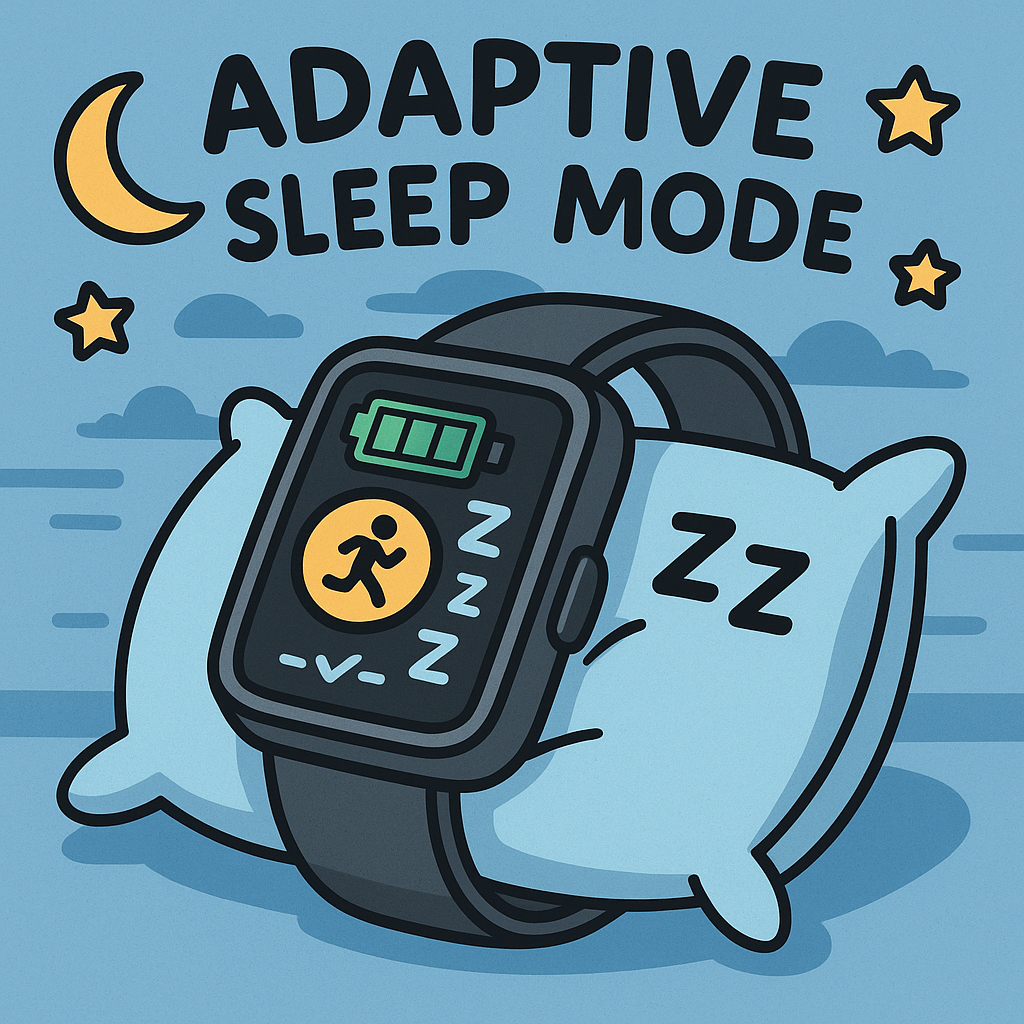
Understanding the Need for Adaptive Sleep Modes
In the rapidly evolving world of smart fitness trackers, battery life remains a critical concern. These devices are expected to deliver real-time health metrics, GPS tracking, and notifications, all while fitting seamlessly into a user’s daily routine. However, as features become more sophisticated, so too does the demand on the battery. This is where implementing adaptive sleep modes in firmware becomes not just beneficial, but essential.
Challenges in Power Management
The primary challenge with battery life in fitness trackers lies in the often conflicting requirements of performance and endurance. Traditional sleep mode implementations either keep the device in a low-power state or turn it off completely, leading to a balance that can be difficult to achieve. A simple approach may save power but at the cost of responsiveness and functionality. Conversely, an overly aggressive performance mode can drain the battery rapidly.
Adaptive Sleep Modes: A Solution
Adaptive sleep modes aim to fine-tune the device’s power consumption based on user behavior and environmental factors. By leveraging algorithms that monitor usage patterns, the firmware can intelligently decide when to enter a low-power state and when to be fully operational.
Designing the Algorithm
At the core of this adaptive approach is a well-crafted algorithm. The algorithm must analyze various inputs, including:
- User activity level (tracked through accelerometers)
- Time of day (considering typical user routines)
- Battery level (to prioritize longevity when necessary)
For instance, if a user typically exercises in the morning, the firmware can anticipate increased activity and keep the device awake longer during that period. Conversely, during anticipated downtime, such as at night, the tracker can enter a deeper sleep state.
Hardware Considerations
Implementing adaptive sleep modes requires thoughtful integration with hardware components. The choice of microcontroller is critical; low-power MCUs with sleep modes that can resume quickly are preferable. Furthermore, the sensors must be capable of operating in low-power states without losing critical functionality. For example, the heart rate monitor can be set to a low sampling rate during inactivity, only ramping up when activity is detected.
Real-World Trade-offs
When designing for adaptive sleep modes, engineers often face real-world trade-offs. For instance, the complexity of the algorithm can lead to increased processing time, which may negate some power savings. Additionally, extensive use of sensors can lead to communication overhead that uses more energy than the traditional methods. This necessitates a careful balance — ensuring that the data collected is meaningful without continuously overburdening the battery.
User Experience and Feedback
Another crucial aspect is the user experience. Users expect their fitness trackers to provide accurate data without noticeable lag. This requires the firmware to be responsive, ensuring that the transition between active and sleep states is seamless. If the device takes too long to wake from sleep, it could frustrate users, leading to a perception of unreliability. Therefore, performance tuning and testing play a significant role in firmware development.
Testing and Iteration
Finally, thorough testing is indispensable. Engineers must simulate various user scenarios to evaluate how well the adaptive sleep modes perform. Over time, data collected from real-world usage can inform further iterations of the algorithm, allowing it to adapt to emerging patterns and behaviors. Continuous improvement is key — as user habits evolve, so too must the firmware.
Implementing adaptive sleep modes in smart fitness trackers is not merely about extending battery life; it’s about enhancing the overall user experience while managing the trade-offs inherent in modern wearable technology. By understanding the complexities of both hardware and firmware, engineers can create solutions that not only meet but exceed user expectations, driving the next generation of fitness tracking devices.