Edge Machine Learning for Real-Time Lithium-Ion Battery Degradation Diagnostics in Electric Vehicles
Understanding the Need for Real-Time Predictive Diagnostics
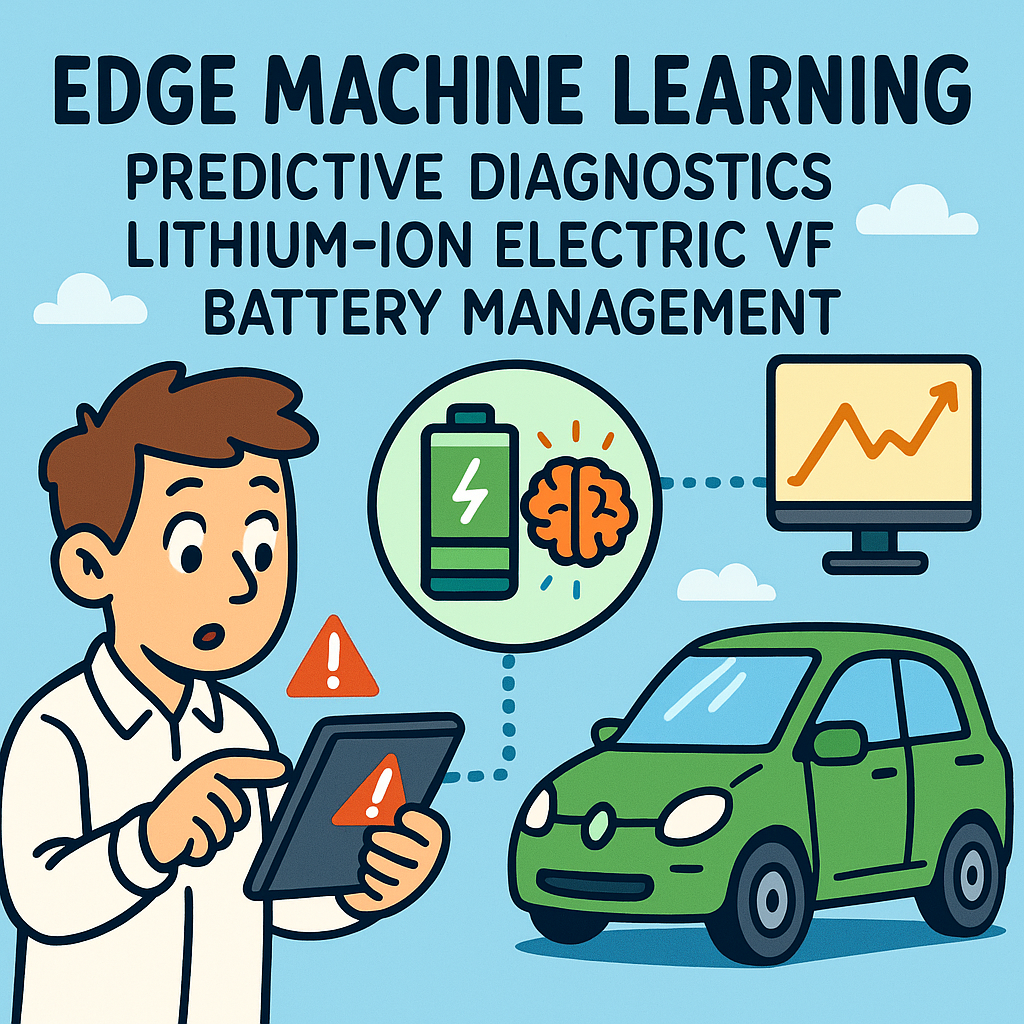
As electric vehicles (EVs) continue to grow in popularity, the performance and longevity of lithium-ion batteries have become critical factors for manufacturers and consumers alike. The degradation of these batteries can lead to reduced range, increased charging times, and ultimately, replacement costs that can affect the total cost of ownership. Therefore, implementing edge machine learning (ML) for real-time predictive diagnostics in battery management systems (BMS) is not just a luxury but a necessity in ensuring reliable vehicle performance.
Challenges in Lithium-Ion Battery Management
Battery degradation is influenced by various factors including charge cycles, temperature, and even the depth of discharge. Traditional BMS typically rely on simple algorithms to monitor battery health, often leading to inaccuracies and delayed responses. The challenge lies in capturing complex patterns that signify early signs of degradation. This is where edge machine learning comes into play, allowing for localized data processing that can yield quicker insights.
Hardware Considerations for Edge ML Implementation
Implementing edge ML requires careful consideration of hardware components. The choice of microcontrollers or FPGAs (Field-Programmable Gate Arrays) can greatly impact the system’s performance. For instance, low-power microcontrollers like the STM32 series can be suitable for basic data processing. However, for more complex ML algorithms, a more powerful processor like the NVIDIA Jetson Nano might be necessary.
In addition to processing power, data acquisition systems must be robust. Sensors that monitor voltage, current, and temperature must have high accuracy and fast response times. A common sensor suite could include:
- Voltage sensors: For real-time battery voltage tracking.
- Current sensors: To monitor charge and discharge rates.
- Temperature sensors: Ensuring the battery operates within safe thermal limits.
Firmware and Data Processing
Once the hardware is in place, the firmware must be designed to handle the influx of data efficiently. This involves implementing algorithms that can preprocess the data before it is sent to the ML model. For example, using techniques such as normalization and feature extraction can significantly improve the model’s accuracy. Additionally, optimizing the code to reduce latency is crucial, as even a slight delay in data processing can lead to inaccurate predictions.
Choosing the Right Algorithms
The selection of ML algorithms is pivotal for predictive diagnostics. Supervised learning techniques, such as regression models or neural networks, can be particularly effective. However, the complexity of these models can be a double-edged sword. For example, while a deep neural network might provide high accuracy, it also requires more computational resources, which can be a limiting factor in edge environments.
On the other hand, simpler models like decision trees or random forests can offer a balance between performance and resource consumption. These models are not only easier to interpret but also require less processing power, making them suitable for real-time applications.
Real-World Design Tradeoffs
In the real world, design choices often come with trade-offs. For instance, using a more sophisticated ML model might yield better predictive performance, but at the cost of longer training times and increased power consumption. In contrast, a simpler model may run efficiently on edge devices but might miss nuanced patterns in the data that could lead to better predictive accuracy.
Another factor to consider is the frequency of data acquisition. While frequent data captures can lead to more accurate predictions, they also require more resources and can lead to quicker battery depletion. Therefore, finding the right balance between data resolution and power consumption is essential.
Deployment and Continuous Learning
Once the models are trained, deploying them in the field is just the beginning. Continuous learning mechanisms can be integrated into the BMS to adapt the model based on real-world performance. This involves periodically updating the model with new data to improve its accuracy. Techniques such as transfer learning can be utilized here, allowing the model to adapt without needing to be retrained from scratch.
This approach not only increases the reliability of the diagnostics but also ensures that the system evolves with changes in battery technology and usage patterns, making the BMS more resilient in the long run.
Conclusion: The Future of Edge ML in EV Battery Management
As we continue to push the boundaries of electric vehicle technology, the integration of edge machine learning for predictive diagnostics will play a pivotal role in shaping the future of battery management systems. With the right hardware, algorithms, and design considerations in place, we can ensure that lithium-ion batteries remain reliable, efficient, and economically viable for years to come.