Introduction
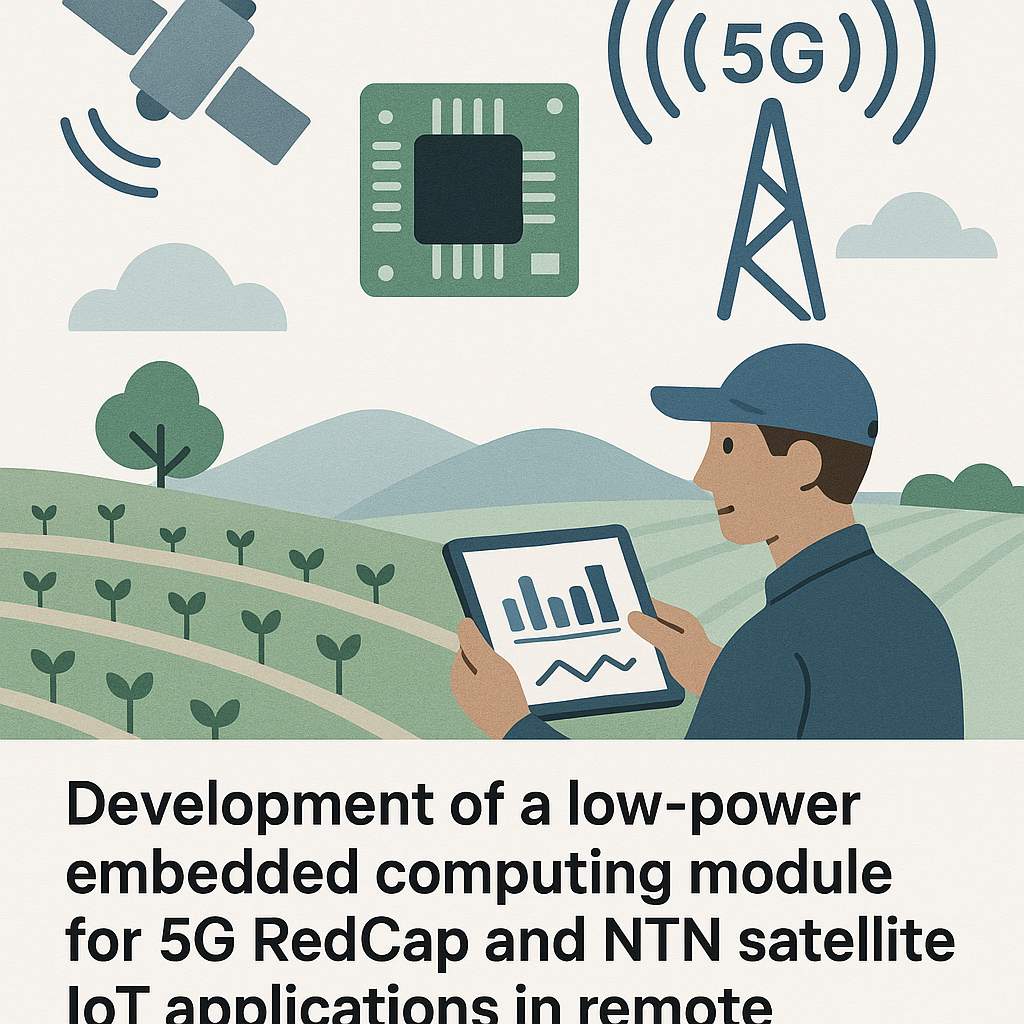
The rapid advancement of technology has ushered in a new era for agricultural monitoring systems. With the integration of 5G Reduced Capability (RedCap) and Non-Terrestrial Networks (NTN) satellite IoT applications, the demand for low-power embedded computing modules has significantly increased. This blog post delves into the development of such a module, focusing on its potential impact on remote agricultural monitoring systems.
Understanding 5G RedCap and NTN Technologies
Before diving into the development process, it’s essential to understand what 5G RedCap and NTN entail:
- 5G Reduced Capability (RedCap): This technology is designed to support IoT devices that require lower data rates and reduced complexity, making it ideal for agricultural sensors.
- Non-Terrestrial Networks (NTN): NTN encompasses satellite-based communication systems that enable connectivity in remote areas where traditional networks are unavailable.
Importance of Low-Power Embedded Computing Modules
Low-power embedded computing modules are crucial for several reasons:
- They enhance the longevity of devices by minimizing energy consumption.
- They facilitate continuous monitoring and data collection without frequent battery replacements.
- They contribute to the overall sustainability of agricultural practices by reducing the carbon footprint.
Design Considerations for the Module
Developing a low-power embedded computing module for agricultural applications requires careful planning and consideration of various factors:
- Power Consumption: The module should operate efficiently under low power to maximize battery life.
- Size and Form Factor: A compact design is necessary for easy integration into existing agricultural machinery.
- Connectivity: The module must support both RedCap and NTN connectivity to ensure seamless communication.
- Environmental Resilience: Given the outdoor application, the module should withstand various weather conditions.
Technical Specifications
The following technical specifications are essential for the development of the module:
- Processor: A low-power microcontroller with support for 5G RedCap and NTN protocols.
- Memory: Sufficient RAM and flash storage to handle data processing and storage needs.
- Sensor Interfaces: Compatibility with various agricultural sensors, such as temperature, humidity, and soil moisture sensors.
- Power Supply: Options for solar power integration to enhance sustainability.
Development Process
The development of the low-power embedded computing module involves several steps:
- Research and Feasibility Study: Conducting research to understand the requirements and feasibility of the module in agricultural settings.
- Prototyping: Creating a prototype to test the initial design and functionalities.
- Testing: Rigorous testing in real-world agricultural environments to assess performance and durability.
- Iteration: Making necessary improvements based on feedback and testing results.
Application in Remote Agricultural Monitoring Systems
The low-power embedded computing module has multiple applications in remote agricultural monitoring systems:
- Soil Monitoring: Continuous data collection on soil moisture and nutrient levels to optimize irrigation and fertilization.
- Crop Health Monitoring: Utilizing sensors to gather data on crop conditions, detecting diseases or pest infestations early.
- Weather Monitoring: Collecting weather data such as temperature and rainfall to assist in better farming decisions.
Conclusion
The development of a low-power embedded computing module for 5G RedCap and NTN satellite IoT applications has the potential to revolutionize remote agricultural monitoring systems. By enabling efficient data collection and communication in areas lacking connectivity, this technology can significantly enhance agricultural productivity and sustainability. As we continue to innovate and refine these modules, the future of smart agriculture looks promising, paving the way for increased food security and resource management.