Impact of EU Spectrum Regulation Changes on LoRaWAN in Smart Agriculture
Introduction
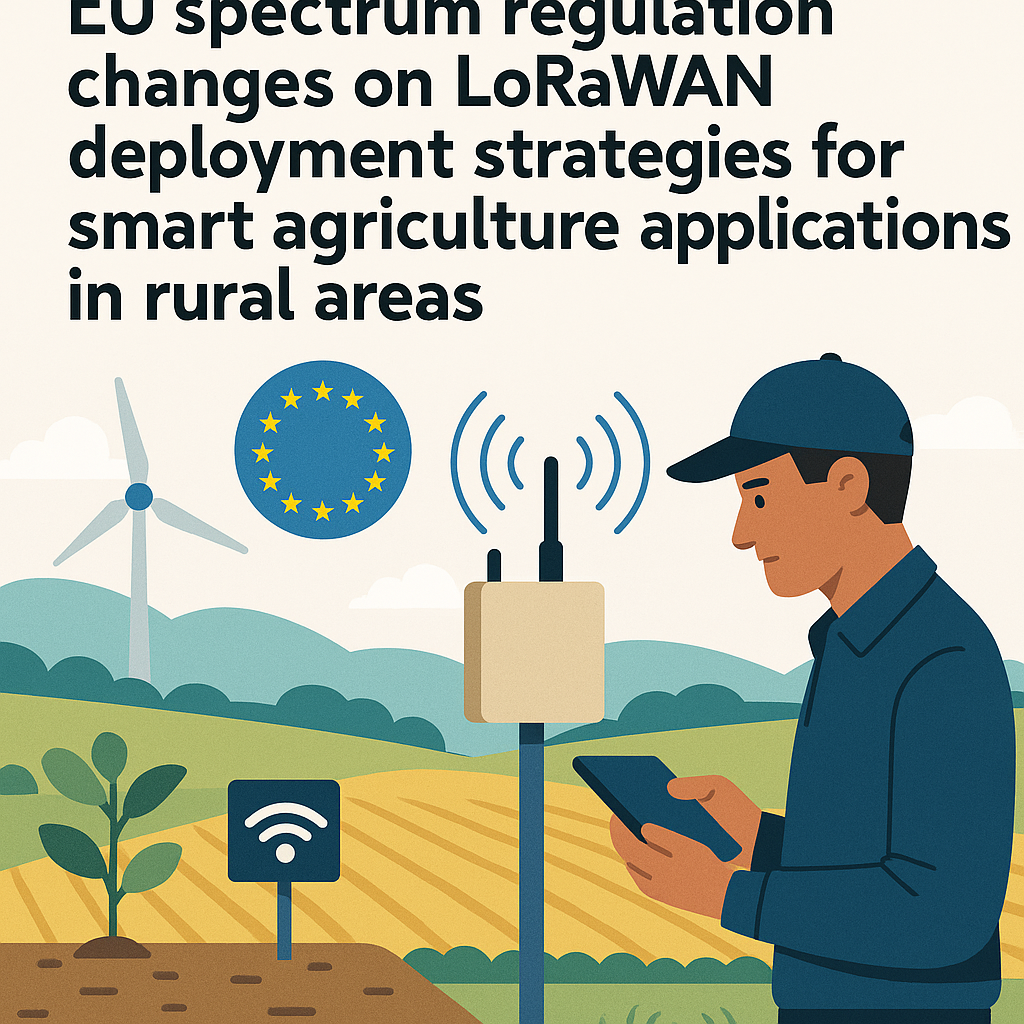
The recent changes in EU spectrum regulations have significant implications for the deployment of LoRaWAN technology in smart agriculture, especially in rural areas. As the agricultural sector increasingly turns to IoT (Internet of Things) solutions for enhancing productivity and sustainability, understanding these regulatory adjustments is crucial for stakeholders. This article analyzes the impact of the new spectrum regulations on LoRaWAN deployment strategies, highlighting opportunities and challenges for smart agriculture applications.
Overview of LoRaWAN Technology
LoRaWAN (Long Range Wide Area Network) is a low-power, wide-area networking protocol designed for connecting battery-operated devices to the internet. It is particularly well-suited for rural applications due to its long-range capabilities and low energy consumption. Key features of LoRaWAN include:
- Long-range connectivity: Can transmit data over several kilometers, making it ideal for rural settings.
- Low power consumption: Devices can operate for years on small batteries.
- Scalability: Supports a large number of devices within a single network.
Recent EU Spectrum Regulation Changes
The European Union has introduced several regulatory changes aimed at enhancing spectrum efficiency and promoting innovation. Key changes include:
- Increased frequency allocations: Expanding the available frequency bands for unlicensed use, particularly in the sub-GHz range.
- Dynamic spectrum access: Allowing for more flexible use of spectrum, enabling devices to coexist and adapt to varying conditions.
- Encouragement of local networks: Supporting the establishment of local networks, which can cater specifically to community needs, particularly in rural areas.
Impact on LoRaWAN Deployment Strategies
The recent regulatory changes are likely to influence various aspects of LoRaWAN deployment strategies in smart agriculture:
1. Expanded Coverage
The increase in frequency allocations allows for broader coverage and improved connectivity in rural areas. Farmers can leverage:
- Enhanced data transmission capabilities over larger distances.
- Reduced dead zones and improved connectivity for remote sensors.
2. Cost Efficiency
With a more flexible spectrum access regime, deployment costs may decrease due to:
- Reduced fees associated with spectrum licensing.
- Lower infrastructure costs as local networks may not require extensive backhaul solutions.
3. Improved Device Interoperability
The dynamic spectrum access encourages the development of devices that can operate across multiple frequency bands. This can lead to:
- Greater device compatibility, allowing for a wider range of IoT solutions in agriculture.
- Increased innovation as manufacturers can create versatile products tailored to specific agricultural needs.
4. Localized Solutions
Encouraging local networks means that farmers can implement solutions tailored to their specific conditions. This can include:
- Customized sensor networks that address local agricultural challenges.
- Community-driven initiatives to develop and maintain LoRaWAN networks.
Challenges to Consider
Despite the opportunities presented by the new regulations, there are challenges that stakeholders must navigate:
1. Regulatory Compliance
While the regulations are designed to promote innovation, there may be complexities in understanding and complying with the new rules, including:
- Adhering to technical standards for devices operating in newly allocated bands.
- Ensuring that local networks do not interfere with existing services.
2. Investment in Infrastructure
Establishing a reliable LoRaWAN network requires initial investment, which can be a barrier for small farmers. Considerations include:
- Funding options for infrastructure development.
- Collaboration with local governments or agricultural cooperatives to share costs.
3. Data Security and Privacy
As with any IoT deployment, data security and privacy are paramount. Farmers must ensure that:
- Data transmitted over the network is encrypted and secure.
- Compliance with GDPR and other regulations related to data protection.
Conclusion
The recent EU spectrum regulation changes represent a significant opportunity for the deployment of LoRaWAN in smart agriculture within rural areas. By expanding coverage, improving cost efficiency, and encouraging localized solutions, these regulations can help farmers leverage IoT technology effectively. However, stakeholders must remain vigilant about regulatory compliance, infrastructure investment, and data security. By addressing these challenges, the agricultural sector can harness the full potential of LoRaWAN technology, paving the way for smarter, more sustainable farming practices.