Impact of EU Spectrum Changes on LoRaWAN for Smart Agriculture Monitoring
Introduction
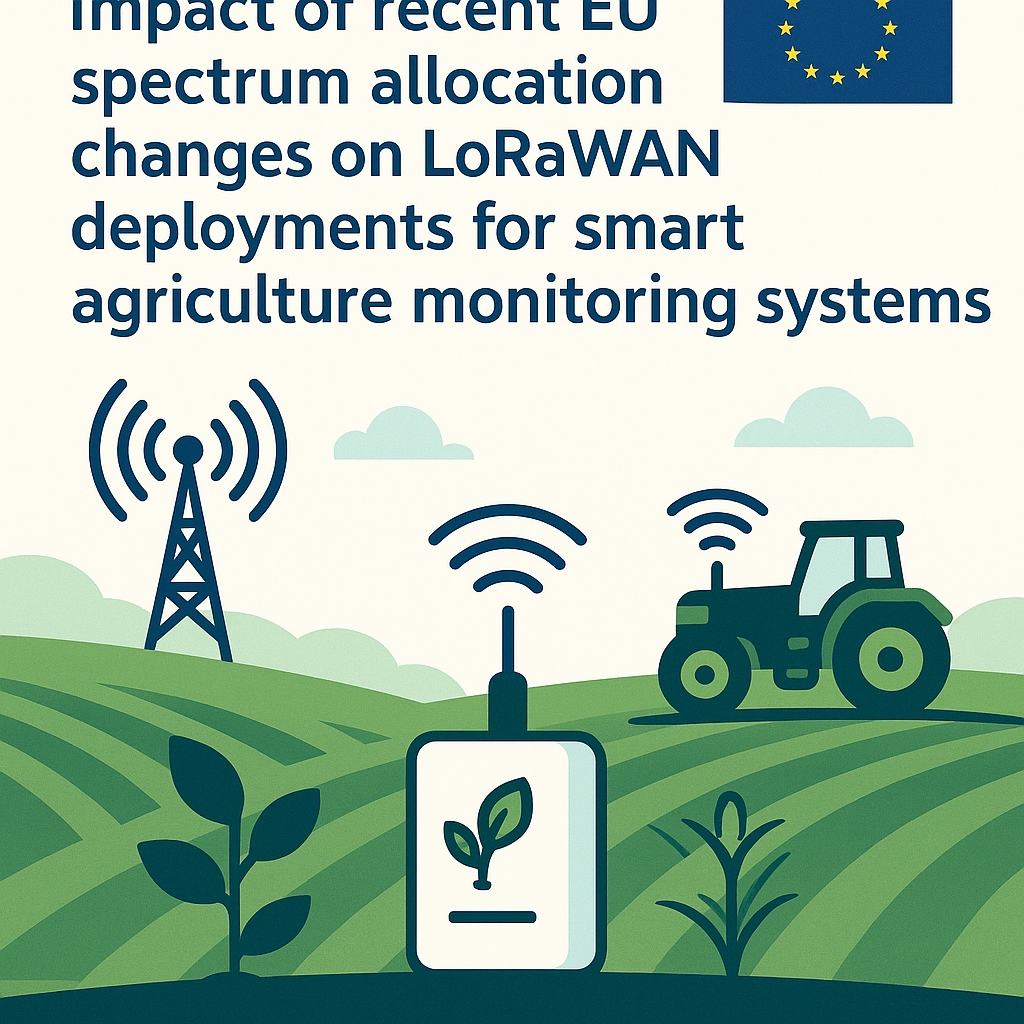
The recent changes in the European Union’s spectrum allocation policy are poised to significantly affect LoRaWAN deployments, particularly in the realm of smart agriculture monitoring systems. These changes aim to enhance the efficiency of spectrum use, support innovation, and foster the growth of IoT technologies in agriculture. In this article, we’ll explore the implications of these spectrum allocation adjustments on LoRaWAN, their potential benefits, and the challenges that may arise for farmers and stakeholders in the agricultural sector.
Understanding LoRaWAN and Its Role in Smart Agriculture
LoRaWAN (Long Range Wide Area Network) is a low-power, wide-area networking protocol designed for IoT devices. It is particularly suited for applications in agriculture due to its ability to connect devices over long distances while consuming minimal power. Smart agriculture monitoring systems leverage LoRaWAN to collect data from various sensors deployed across agricultural fields. These systems can monitor:
- Soil moisture levels
- Temperature and humidity
- Crop health
- Pest and disease detection
- Weather conditions
Recent EU Spectrum Allocation Changes
In response to the growing demand for IoT connectivity, the EU has implemented changes to its spectrum allocation policies, particularly focusing on the sub-GHz frequency bands that are critical for LoRaWAN operation. Key changes include:
- Increased Frequency Bands: The allocation of additional frequencies for unlicensed use, which can enhance the capacity for LoRaWAN networks.
- Dynamic Spectrum Access: Introduction of dynamic spectrum sharing techniques, allowing multiple technologies to coexist in the same band.
- Regulatory Support: Streamlined regulations to encourage the deployment of IoT technologies and applications in agriculture.
The Benefits of Spectrum Changes for LoRaWAN Deployments
The adjustments in spectrum allocation are expected to have several positive impacts on LoRaWAN deployments in smart agriculture:
- Enhanced Connectivity: More available frequencies mean that farmers can deploy a greater number of sensors without interference, leading to improved data collection.
- Cost-Effectiveness: With more unlicensed bands, farmers may reduce costs associated with licensing fees, making smart agriculture more accessible.
- Improved Data Accuracy: Increased capacity and reduced congestion in LoRaWAN networks can lead to more reliable data transmission, which is crucial for timely decision-making.
- Encouragement of Innovation: The regulatory changes can stimulate innovation in agricultural technology, leading to the development of new solutions that utilize LoRaWAN capabilities.
Challenges Ahead for Farmers and Stakeholders
While there are many benefits associated with the recent spectrum allocation changes, there are also challenges that must be addressed:
- Transition Period: The shift may require existing LoRaWAN networks to adapt to new frequency bands, which could involve additional costs and technical adjustments.
- Interference Concerns: With dynamic spectrum access, there is a risk of interference between different IoT technologies, which could impact the reliability of LoRaWAN communications.
- Awareness and Education: Farmers and agricultural stakeholders must be educated about the new spectrum allocation and how best to utilize it for their operations.
Case Studies: Impact on Smart Agriculture
Several pilot projects and case studies have already begun to illustrate the impact of these spectrum changes on smart agriculture:
- Precision Farming in the Netherlands: Farmers are utilizing new frequency bands to deploy a larger array of soil sensors, leading to better water management and reduced fertilizer use.
- Crop Monitoring in Spain: The implementation of dynamic spectrum access in rural areas has enabled farmers to gather real-time data on crop health, allowing for timely interventions.
Conclusion
The recent changes in the EU spectrum allocation policy represent a pivotal moment for LoRaWAN deployments in smart agriculture monitoring systems. By enhancing connectivity, reducing costs, and supporting innovation, these changes can lead to more efficient agricultural practices and improved yields. However, it is crucial for farmers and stakeholders to remain informed and prepared to navigate the challenges that accompany this transition. As the agricultural sector continues to evolve with technology, the successful implementation of LoRaWAN will play a significant role in shaping the future of farming in Europe.