Ethernet TSN for Real-Time Data Sync in Autonomous Vehicle Sensors
Introduction
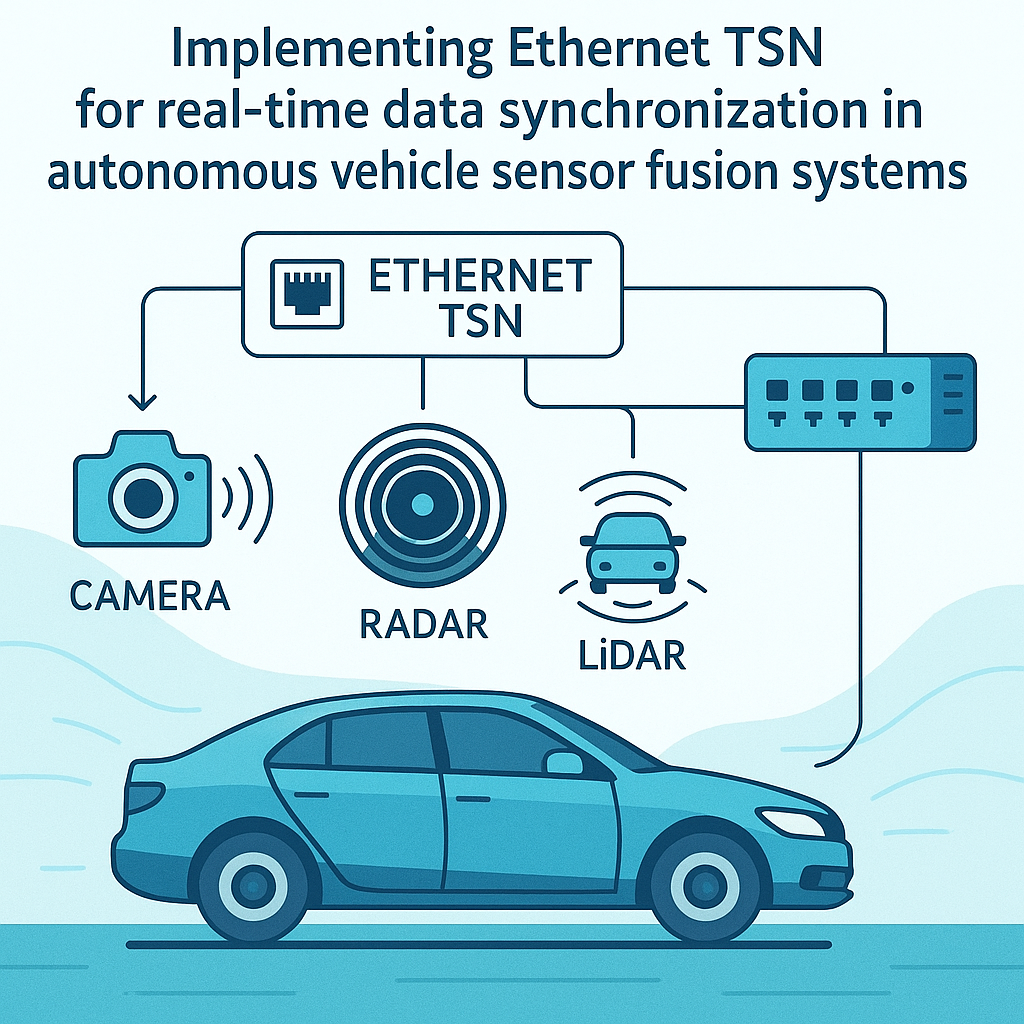
As autonomous vehicles become increasingly sophisticated, the need for reliable and real-time data synchronization among various sensors is paramount. In this context, implementing Ethernet Time-Sensitive Networking (TSN) stands out as a vital technology for achieving synchronized communication. This blog post delves into the fundamentals of Ethernet TSN and its crucial role in sensor fusion systems for autonomous vehicles.
What is Ethernet TSN?
Ethernet Time-Sensitive Networking (TSN) is an extension of standard Ethernet designed to provide deterministic communication over Ethernet. It offers features that ensure timely data delivery, which is essential in applications requiring real-time performance. Key components of TSN include:
- Time Synchronization: TSN ensures all devices on the network can synchronize their clocks, allowing for precise timing of data transmission.
- Traffic Scheduling: TSN allows for the prioritization of critical data packets, ensuring that time-sensitive information is transmitted first.
- Low Latency: TSN minimizes delays in data transmission, which is crucial for real-time applications.
- Reliability: TSN provides mechanisms to recover from packet loss, enhancing the robustness of data transmission.
The Importance of Real-Time Data Synchronization
In autonomous vehicles, multiple sensors such as LiDAR, cameras, and radar systems work together to create a comprehensive understanding of the environment. Real-time data synchronization among these sensors is essential for the following reasons:
- Accurate Perception: Synchronized data allows for a cohesive representation of the vehicle’s surroundings, improving obstacle detection and recognition.
- Improved Decision Making: When data from various sources is aligned in time, the vehicle’s decision-making algorithms can operate more effectively, leading to better navigation and safety.
- Enhanced Control: Real-time synchronization enables better coordination of vehicle control systems, optimizing performance under dynamic conditions.
Implementing Ethernet TSN in Sensor Fusion Systems
The integration of Ethernet TSN into sensor fusion systems for autonomous vehicles involves several key steps:
1. Network Design
Designing a network that incorporates TSN requires careful consideration of both hardware and software components. Key aspects include:
- Selection of TSN-compliant switches and routers to handle prioritized traffic.
- Implementation of TSN protocols such as IEEE 802.1AS for time synchronization and IEEE 802.1Qbv for traffic scheduling.
- Ensuring compatibility with existing vehicle communication standards.
2. Time Synchronization
Effective time synchronization is crucial for ensuring all sensors report data in a coherent time frame. This can be achieved through:
- Utilizing Precision Time Protocol (PTP) as defined in IEEE 1588, which enables sub-microsecond accuracy.
- Configuring TSN switches to distribute time synchronization signals across the network.
3. Traffic Management
To prioritize time-sensitive data, the following strategies can be implemented:
- Defining traffic classes based on the criticality of sensor data.
- Using time-aware scheduling to allocate bandwidth dynamically based on real-time requirements.
- Implementing techniques to ensure low latency for high-priority messages.
4. Testing and Validation
After implementing TSN, thorough testing is necessary to validate the system’s performance. Key testing strategies include:
- Simulating various traffic conditions to evaluate the robustness of the network.
- Measuring latency and jitter to ensure that data delivery meets real-time requirements.
- Conducting field tests in real-world scenarios to assess the effectiveness of sensor fusion in autonomous driving.
Challenges and Considerations
While implementing Ethernet TSN offers numerous benefits, several challenges must be addressed:
- Complexity of Integration: Integrating TSN with existing systems and ensuring compatibility can be challenging.
- Cost: TSN-compliant hardware can be more expensive than traditional networking equipment.
- Skill Requirements: Specialized knowledge is required to design, implement, and maintain a TSN network effectively.
Conclusion
Implementing Ethernet TSN for real-time data synchronization in autonomous vehicle sensor fusion systems is essential for enhancing the safety and efficiency of autonomous driving. By providing a robust framework for deterministic communication, TSN enables accurate perception, improved decision-making, and effective control of autonomous vehicles. As the technology continues to evolve, addressing the challenges of integration and cost will be critical to fully realizing the potential of TSN in the automotive sector.