Enhancing Smart Factory Robotics with Real-Time Data Synchronization in OPC UA Stacks
Understanding Real-Time Data Synchronization in OPC UA
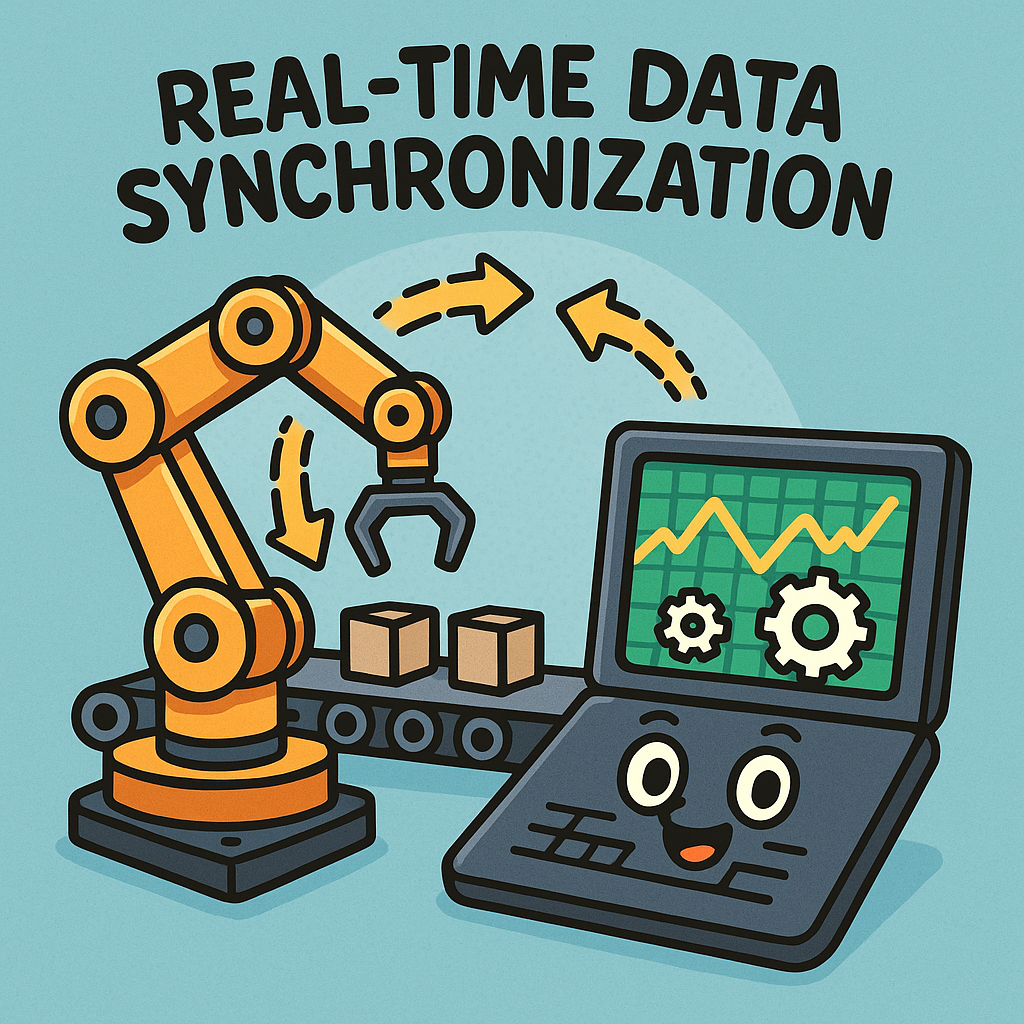
In the landscape of smart factory robotics, the integration of OPC UA (Open Platform Communications Unified Architecture) stacks presents a unique set of challenges and opportunities. As factories become increasingly automated, the need for real-time data synchronization becomes paramount. This involves ensuring that data across various devices and systems is not only accurate but also timely, creating a seamless flow of information that supports operational efficiency.
The Problem: Latency and Data Integrity
One of the primary challenges in implementing real-time data synchronization within OPC UA stacks is latency. In a smart factory environment, robots and machines generate vast amounts of data every second. If this data experiences delays during transmission, it can lead to inefficiencies, errors in decision-making, and ultimately, costly downtime.
Moreover, the integrity of this data must be maintained throughout the synchronization process. Any disruption or loss of data can result in incorrect operational contexts, leading to malfunctioning machinery or sub-optimal production processes. Thus, the key lies in understanding how to minimize latency while maintaining data integrity.
Design Considerations: Hardware and Firmware
When architecting an OPC UA stack for real-time applications, several hardware and firmware considerations must be made. Typically, the choice of network interface controllers (NICs) can significantly affect performance. High-speed Ethernet interfaces that support features like Time-Sensitive Networking (TSN) can help achieve the low-latency communication needed for synchronization.
On the firmware side, the implementation of efficient protocol stacks is crucial. Choosing an embedded OS that can handle real-time tasks, such as FreeRTOS or Zephyr, provides the necessary capabilities for processing data packets quickly. With OPC UA, having a lightweight stack that minimizes overhead while processing messages can drastically improve responsiveness.
Algorithms for Data Synchronization
Several algorithms can be employed to enhance data synchronization in OPC UA stacks. One effective approach is the use of publish/subscribe models where data producers (like robots) publish their state changes to a broker, and subscribers (like monitoring systems) consume those updates. This decouples the producer from the consumer, allowing for asynchronous data handling which can reduce latency.
Additionally, implementing delta encoding can optimize data transmission. Instead of sending the entire data set, only changes (or deltas) are sent over the network. This approach not only reduces the amount of data transmitted but also speeds up synchronization, especially in systems with high-frequency updates.
Trade-offs in Design Decisions
Every design decision comes with trade-offs. For instance, while using a publish/subscribe model can enhance responsiveness, it can also introduce complexities in managing subscriptions, especially in large-scale environments with multiple sensors and devices. The challenge lies in balancing the system’s scalability with the overhead of managing numerous connections.
Moreover, while delta encoding optimizes data transmission, it may introduce additional processing overhead on the receiving end, as the system must reconstruct the full data set from the deltas. Therefore, it is critical to evaluate the specific requirements of the application and choose the right balance between speed and resource utilization.
Real-World Implementation Challenges
In practice, integrating real-time data synchronization into OPC UA stacks is often easier said than done. Deployment environments can be unpredictable; various factors such as electromagnetic interference, network congestion, and unexpected downtimes can affect performance. For instance, in a factory setting, the presence of heavy machinery can create noise that interferes with wireless communication.
Moreover, ensuring backward compatibility with legacy systems can pose significant challenges. It’s essential to design a solution that can integrate seamlessly with existing infrastructure while still leveraging the benefits of real-time synchronization. This often requires custom solutions and additional layers of abstraction.
Conclusion
While the journey to implement real-time data synchronization in OPC UA stacks is fraught with challenges, the potential benefits for smart factory robotics integration are immense. By carefully considering hardware, firmware, algorithms, and the trade-offs associated with design decisions, engineers can create robust systems that enhance performance and operational efficiency. As the industry continues to evolve, the importance of real-time data synchronization will only grow, driving further innovation in automation technologies.