Advancements in Low-Latency High-Contrast OLED Displays for Enhanced Real-Time Marine Navigation in Autonomous Vessels
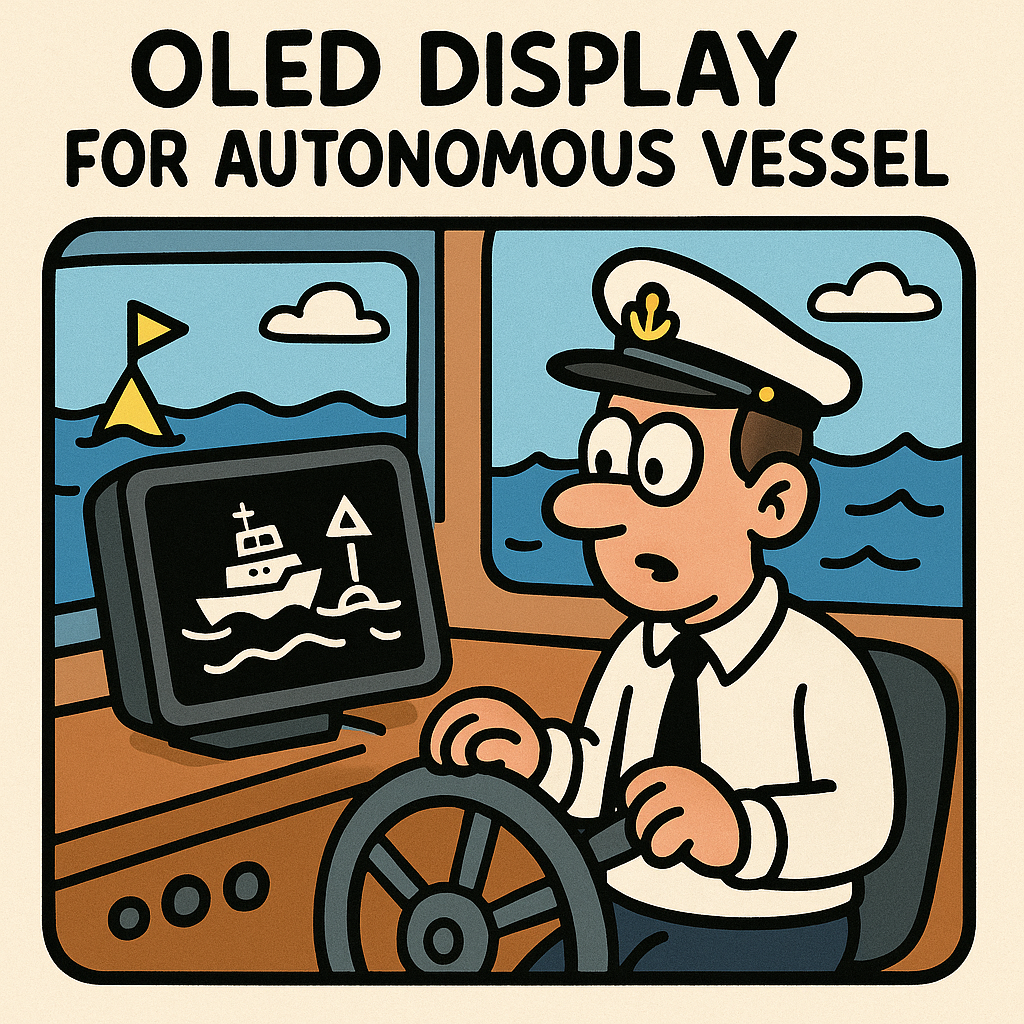
Introduction to Low-Latency OLED Displays
The demand for advanced display technologies in autonomous vessels has surged, primarily due to the need for precise real-time marine navigation. One of the most promising solutions lies in the development of low-latency, high-contrast OLED displays. These displays not only provide vibrant visuals but also ensure that critical information is delivered instantly, which is paramount in marine environments where conditions can change rapidly.
The Challenges of Real-Time Navigation
Marine navigation systems require displays that can handle low latency to reflect real-time data. This is crucial for avoiding obstacles, navigating through challenging waters, and making split-second decisions based on environmental conditions. Traditional LCD displays, while widely used, often suffer from latency issues that can lead to visual artifacts and a lag in information relay. This is where OLED technology shines.
Understanding OLED Technology
OLED (Organic Light Emitting Diode) technology utilizes organic compounds that emit light when an electric current is applied. This allows for individually lit pixels, leading to deeper blacks and higher contrast ratios compared to LCDs. In the context of marine navigation, this feature is particularly beneficial as it enhances visibility under varying lighting conditions, including direct sunlight reflecting off water.
Engineering the Display for Low Latency
To achieve low latency, several engineering decisions come into play:
- Driver Circuit Design: The efficiency of the driver circuitry is crucial. Using high-speed signal processing chips allows for rapid pixel response times. Engineers often implement FPGA (Field-Programmable Gate Array) technology to manage complex graphics rendering and minimize processing delays.
- Refresh Rate Optimization: A higher refresh rate ensures that the display can update frequently enough to keep pace with incoming data. For marine applications, targeting refresh rates of 120 Hz or higher can significantly reduce motion blur and improve clarity during rapid movement.
- Input Latency Reduction: The firmware must be optimized to minimize the delay between sensor input and display output. This often involves fine-tuning the software layer that processes data from navigation systems, ensuring that it can handle multiple data streams simultaneously without bottlenecking.
High-Contrast Requirements for Marine Environments
Marine environments present unique challenges in terms of visibility. High-contrast displays are essential for readability, especially when navigating through fog, rain, or glare. The engineering of these displays must consider:
- Brightness Levels: OLED displays can achieve high brightness levels, but sustaining this brightness without overheating is a challenge. Engineers often integrate advanced thermal management solutions such as heat sinks and thermal pads to maintain optimal operating temperatures.
- Anti-Reflective Coatings: To combat glare, anti-reflective coatings are applied. The choice of material and application technique can significantly impact the light transmission and overall visibility of the display.
- Color Calibration: Accurate color representation is vital for navigational accuracy. Implementing real-time color calibration algorithms ensures that the colors displayed reflect the actual conditions, which is critical when identifying navigational markers or hazards.
Real-World Design Tradeoffs
Designing an OLED display for marine navigation is not without its tradeoffs. For instance, while higher resolution can improve detail, it often comes at the cost of increased processing power and potential latency. Engineers must balance resolution, refresh rate, and brightness against power consumption, especially in battery-operated autonomous vessels.
Additionally, the environmental durability of displays must be a key focus. Marine environments are harsh, with exposure to saltwater, humidity, and fluctuating temperatures. Engineers often select materials that are resistant to corrosion and implement robust sealing techniques to protect sensitive components.
Future Considerations in OLED Development
As technology continues to evolve, the integration of advanced algorithms for predictive display management could further enhance the user experience. By anticipating navigational changes based on historical data and environmental patterns, these systems could provide not just reactive, but proactive information to operators.
The move towards low-latency, high-contrast OLED displays in autonomous vessels signifies a shift towards more sophisticated and responsive marine navigation systems. This evolution is not merely about aesthetics; it’s about enhancing safety and operational efficiency in an ever-complex maritime landscape.