Advancements in 3D Packaging Techniques for Automotive Embedded SoCs
Introduction
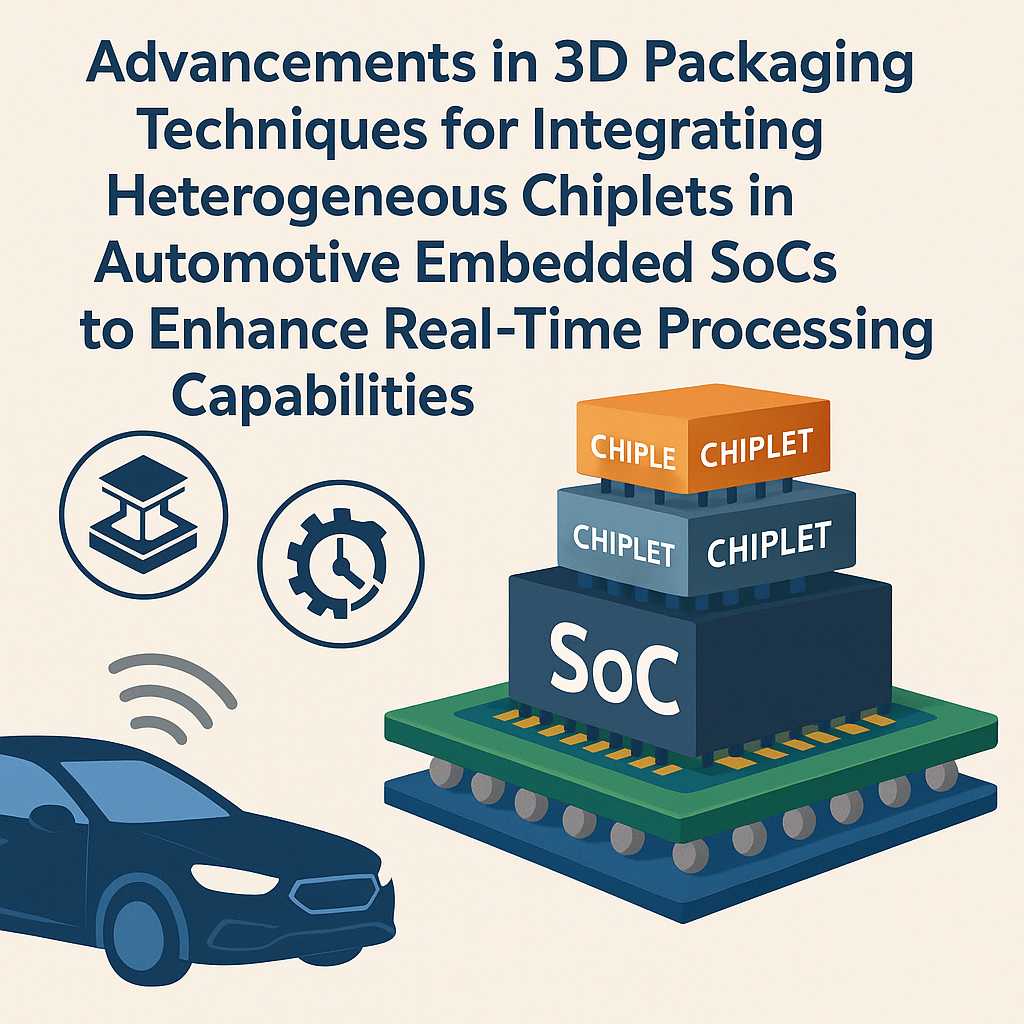
As the automotive industry evolves towards more advanced technologies, the integration of heterogeneous chiplets within embedded System-on-Chips (SoCs) is becoming increasingly important. The advancement of 3D packaging techniques is playing a crucial role in enhancing real-time processing capabilities, enabling vehicles to leverage sophisticated features such as advanced driver-assistance systems (ADAS) and autonomous driving. This blog will explore the latest developments in 3D packaging techniques and their implications for the automotive sector.
Understanding Heterogeneous Chiplets
Heterogeneous chiplets refer to a modular approach in semiconductor design, where different functional units—such as CPUs, GPUs, and specialized processing cores—are integrated within a single package. This integration allows for:
- Increased Performance: By combining different chiplets optimized for specific tasks, overall system performance can be significantly enhanced.
- Improved Power Efficiency: Tailoring chiplets for specific functions allows for better power management and reduced consumption.
- Scalability: The modular nature of chiplets means that manufacturers can add or upgrade specific functionalities without redesigning the entire SoC.
The Role of 3D Packaging Techniques
3D packaging techniques involve stacking multiple semiconductor dies vertically, allowing for a more compact design and shorter interconnects. This approach offers several advantages:
- Reduced Latency: Shorter interconnects lead to faster data transfer rates, which is critical for real-time processing in automotive applications.
- Space Efficiency: 3D packaging minimizes the footprint of chipsets, allowing for more compact designs that fit seamlessly into automotive architectures.
- Thermal Management: Advanced thermal solutions can be implemented in 3D packages to manage heat dissipation effectively, essential for maintaining performance in automotive environments.
Recent Advancements in 3D Packaging
The following advancements in 3D packaging techniques are particularly noteworthy:
- Through-Silicon Vias (TSVs): TSV technology allows for vertical electrical connections between stacked dies, significantly improving signal integrity and reducing power consumption.
- Micro-bumps and Interposers: The use of micro-bumps and interposers facilitates better alignment and connectivity between chiplets, enhancing overall performance and reliability.
- Advanced Materials: New materials for substrates and encapsulants are being developed to improve thermal performance and mechanical stability, crucial for automotive applications.
- Integration of AI and Machine Learning: Chiplets designed for AI processing can be integrated into 3D packages, enabling real-time data processing and decision-making in vehicles.
Impact on Automotive Embedded SoCs
The integration of these advanced 3D packaging techniques into automotive embedded SoCs has profound implications:
- Enhanced Real-Time Processing: The ability to process data from multiple sensors (e.g., cameras, LIDAR) in real-time is critical for the functionality of ADAS and autonomous vehicles.
- Increased Reliability: Improved thermal management and signal integrity contribute to the reliability of automotive systems, which must operate under various environmental conditions.
- Cost Efficiency: The modular nature of chiplets allows for cost-effective upgrades and maintenance, reducing long-term costs for manufacturers.
Challenges and Considerations
Despite the advancements, several challenges remain in the field of 3D packaging for automotive SoCs:
- Complexity of Design: Designing 3D packages with multiple heterogeneous chiplets requires sophisticated engineering skills and tools.
- Thermal Management: As the density of components increases, managing heat effectively becomes increasingly complex and crucial.
- Testing and Validation: Ensuring that 3D packaged chips meet automotive standards requires extensive testing, which can be time-consuming and costly.
Conclusion
Advancements in 3D packaging techniques for integrating heterogeneous chiplets are paving the way for the next generation of automotive embedded SoCs. These developments not only enhance real-time processing capabilities but also contribute to the overall efficiency, reliability, and scalability of automotive systems. As the industry continues to innovate, addressing the challenges associated with 3D packaging will be critical to fully harnessing the benefits of this technology in the quest for smarter, safer vehicles.