Introduction
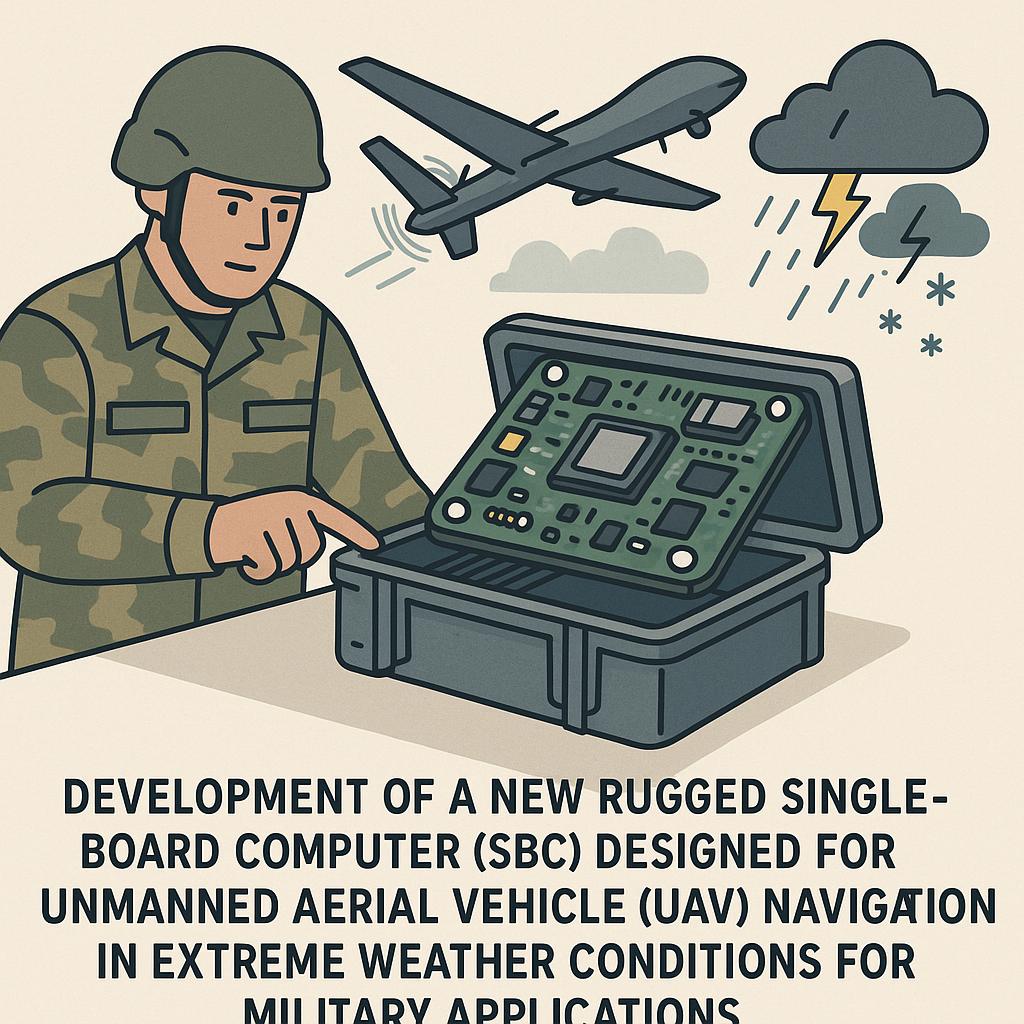
The development of unmanned aerial vehicles (UAVs) has revolutionized military operations, providing advanced reconnaissance, surveillance, and combat capabilities. As these technologies evolve, the need for robust and reliable hardware becomes imperative, particularly in extreme weather conditions. This article explores the development of a new rugged single-board computer (SBC) specifically designed for UAV navigation in challenging environments.
Understanding the Need for Rugged SBCs
Unmanned aerial vehicles operate in a variety of environments, often facing harsh weather conditions. Traditional computing solutions may fail under pressure, leading to operational failures. Key factors driving the need for rugged SBCs include:
- Extreme temperatures: UAVs may be deployed in hot deserts or frigid polar regions, requiring components that can function reliably across a wide temperature range.
- Humidity and moisture: Rain, fog, and high humidity can damage electronic components, necessitating waterproof or moisture-resistant designs.
- Vibration and shock: Military UAVs often experience significant vibration during flight, requiring SBCs to withstand these forces without malfunctioning.
- Dust and debris: Environments with sand or dust can be detrimental to electronic hardware, highlighting the importance of sealed designs.
Key Features of the New Rugged SBC
The new rugged SBC designed for UAV navigation boasts several features tailored for extreme conditions:
- Wide operating temperature range: Capable of functioning in temperatures from -40°C to 85°C, ensuring reliability in diverse climates.
- IP67 rating: This rating indicates that the SBC is completely dust-tight and can withstand immersion in water, making it ideal for wet conditions.
- Vibration and shock resistance: Designed to meet military standards, the SBC can tolerate high levels of vibration and impact, ensuring operational integrity.
- Low power consumption: Optimized for energy efficiency, allowing extended UAV flight times without compromising performance.
- Modular design: The SBC can be easily upgraded or modified to incorporate the latest technologies or adapt to specific mission requirements.
Technological Innovations
In developing the new rugged SBC, several innovative technologies have been integrated to enhance performance:
- Advanced processing capabilities: Featuring multi-core processors that support real-time data processing and advanced navigation algorithms.
- Enhanced connectivity: Equipped with multiple communication interfaces (e.g., Ethernet, serial, USB) to facilitate seamless data transfer and integration with UAV systems.
- Built-in GPS and inertial navigation: These features provide precise location tracking and navigation capabilities, crucial for military missions.
- AI and machine learning capabilities: Integrating AI enables autonomous navigation and decision-making, enhancing the UAV’s effectiveness in complex environments.
Applications in Military Operations
The rugged SBC is poised to enhance several military UAV applications:
- Surveillance and reconnaissance: The SBC’s advanced processing capabilities support real-time video analysis and target tracking.
- Search and rescue missions: In extreme conditions, UAVs equipped with the rugged SBC can assist in locating and aiding stranded personnel.
- Logistics and supply delivery: Reliable navigation in adverse weather allows for the transport of supplies to remote or inaccessible areas.
- Combat support: The SBC facilitates autonomous flight paths and data analysis for tactical operations, increasing mission efficiency.
Challenges in Development
While the development of the rugged SBC offers numerous advantages, several challenges were encountered during the process:
- Cost constraints: Balancing performance and durability with budget limitations was a significant consideration.
- Testing and validation: Rigorous testing in various extreme conditions was essential to ensure reliability, which required substantial resources and time.
- Integration with existing systems: Ensuring compatibility with current UAV platforms and software required extensive collaboration with military engineers.
Conclusion
The development of a new rugged single-board computer for UAV navigation marks a significant advancement in military technology, particularly for operations in extreme weather conditions. With its robust features, innovative technologies, and applications in critical military functions, this SBC enhances the capabilities of UAVs, ensuring they can operate effectively in the most challenging environments. As military operations become increasingly reliant on unmanned systems, the importance of resilient and versatile computing solutions cannot be overstated.