
Introduction
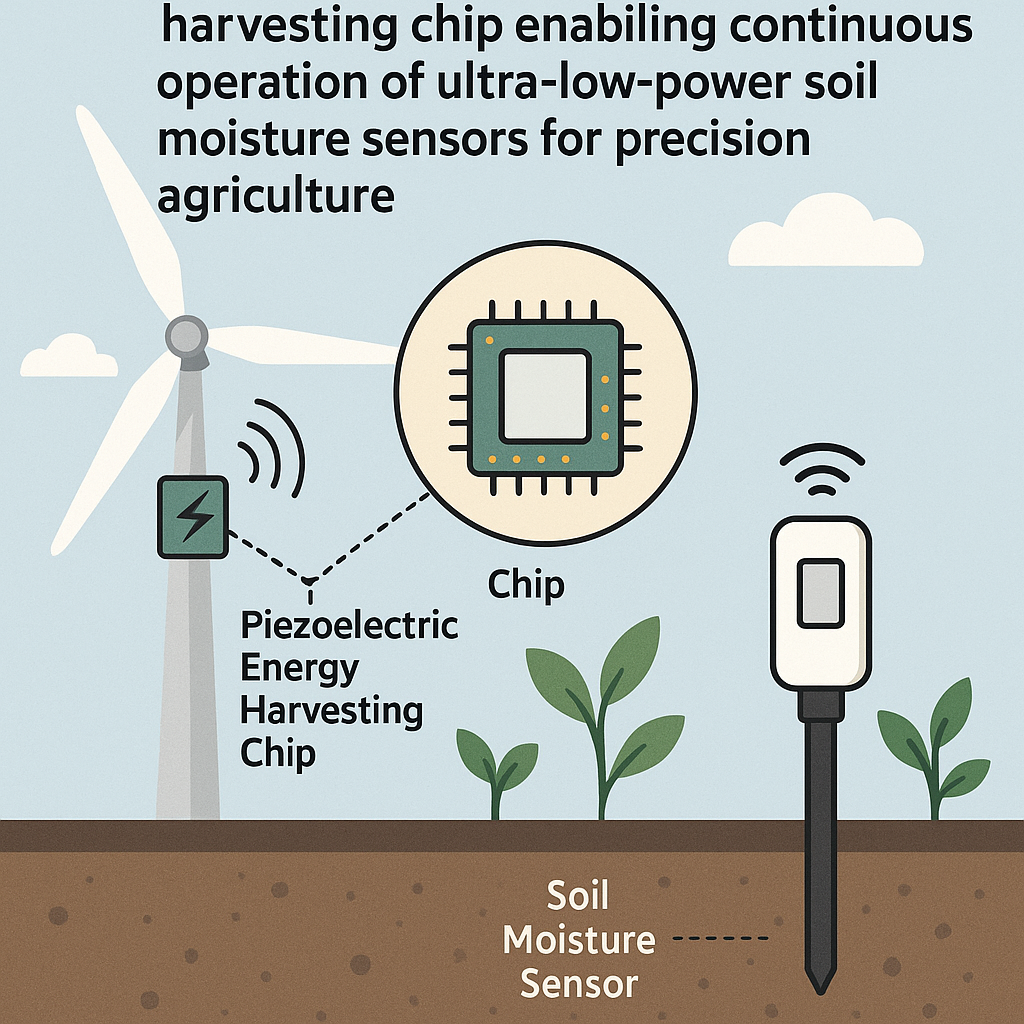
In the field of precision agriculture, the need for continuous monitoring of soil moisture levels is paramount for optimizing irrigation and improving crop yields. Traditional power sources for soil moisture sensors can be costly and inconvenient, leading to a rise in interest for alternative energy solutions. One promising approach is the development of a piezoelectric energy harvesting chip. This chip can convert ambient mechanical energy into electrical energy, enabling ultra-low-power soil moisture sensors to operate continuously without the need for battery replacements or external power sources.
What is Piezoelectric Energy Harvesting?
Piezoelectric energy harvesting is a technology that utilizes materials that generate an electric charge in response to mechanical stress. This process can harness energy from vibrations, pressure changes, and other mechanical movements. The harvested energy can then be used to power small electronic devices, making it an ideal solution for remote sensors in agriculture.
Key Benefits of Piezoelectric Energy Harvesting
- Sustainability: Reduces reliance on batteries and fossil fuels.
- Cost-effective: Lowers maintenance costs associated with battery replacements.
- Continuous operation: Enables sensors to function continuously without interruptions.
- Environmentally friendly: Minimizes waste from discarded batteries.
The Development Process of the Energy Harvesting Chip
The creation of an efficient piezoelectric energy harvesting chip involves several stages, including material selection, design optimization, and integration with sensor technology. Each of these stages plays a critical role in ensuring the chip’s effectiveness in real-world agricultural applications.
Material Selection
Choosing the right piezoelectric materials is essential for maximizing energy conversion efficiency. Common materials used include:
- PZT (Lead Zirconate Titanate): Known for its high piezoelectric coefficients.
- PVDF (Polyvinylidene Fluoride): A polymer that offers flexibility and lightweight properties.
- Quartz: A naturally occurring mineral that exhibits stable piezoelectric properties.
Design Optimization
The design of the energy harvesting chip must be optimized to ensure maximum energy capture. Key considerations include:
- Resonance frequency: Matching the chip’s resonance frequency with the frequency of ambient vibrations.
- Surface area: Increasing the surface area for energy capture through innovative geometries.
- Encapsulation: Protecting the chip from environmental factors while ensuring effective energy transfer.
Integration with Soil Moisture Sensors
Once the piezoelectric energy harvesting chip is developed, the next step is integrating it with ultra-low-power soil moisture sensors. The goal is to create a self-sustaining sensor system capable of continuous operation.
Ultra-Low-Power Soil Moisture Sensors
These sensors typically operate on very low power, often in the micro-watt range. Integrating them with a piezoelectric energy harvesting chip can ensure they receive a steady power supply. Key features of these sensors include:
- Low energy consumption: Designed to use minimal power during operation.
- High sensitivity: Capable of detecting minute changes in soil moisture levels.
- Wireless communication: Allows for data transmission without the need for wired connections.
Real-World Applications in Precision Agriculture
The integration of piezoelectric energy harvesting chips with soil moisture sensors has transformative potential in precision agriculture. Some of the key applications include:
1. Efficient Irrigation Management
Farmers can monitor soil moisture levels in real-time, enabling them to irrigate only when necessary. This approach conserves water and reduces costs associated with over-irrigation.
2. Data-Driven Decision Making
Continuous data collection allows farmers to make informed decisions based on accurate soil moisture readings, leading to improved crop health and yields.
3. Remote Monitoring
With wireless communication capabilities, farmers can monitor their fields from anywhere, allowing for timely interventions when moisture levels drop.
Challenges and Future Directions
Despite the advantages, there are challenges associated with the deployment of piezoelectric energy harvesting chips in agriculture. These include:
- Environmental Variability: The efficiency of energy harvesting can be affected by environmental conditions.
- Cost of Implementation: Initial development and production costs may be high.
- Durability: Ensuring that the chips can withstand harsh agricultural environments.
Future research should focus on improving material performance, reducing costs, and enhancing the durability of these systems to ensure widespread adoption in the agricultural sector.
Conclusion
The development of a piezoelectric energy harvesting chip represents a significant advancement in powering ultra-low-power soil moisture sensors for precision agriculture. By harnessing ambient mechanical energy, these chips can enable continuous operation of sensors, leading to more efficient irrigation practices and better crop management. As technology advances and challenges are addressed, the potential for sustainable farming practices will continue to grow, paving the way for a greener and more productive agricultural future.