
Introduction
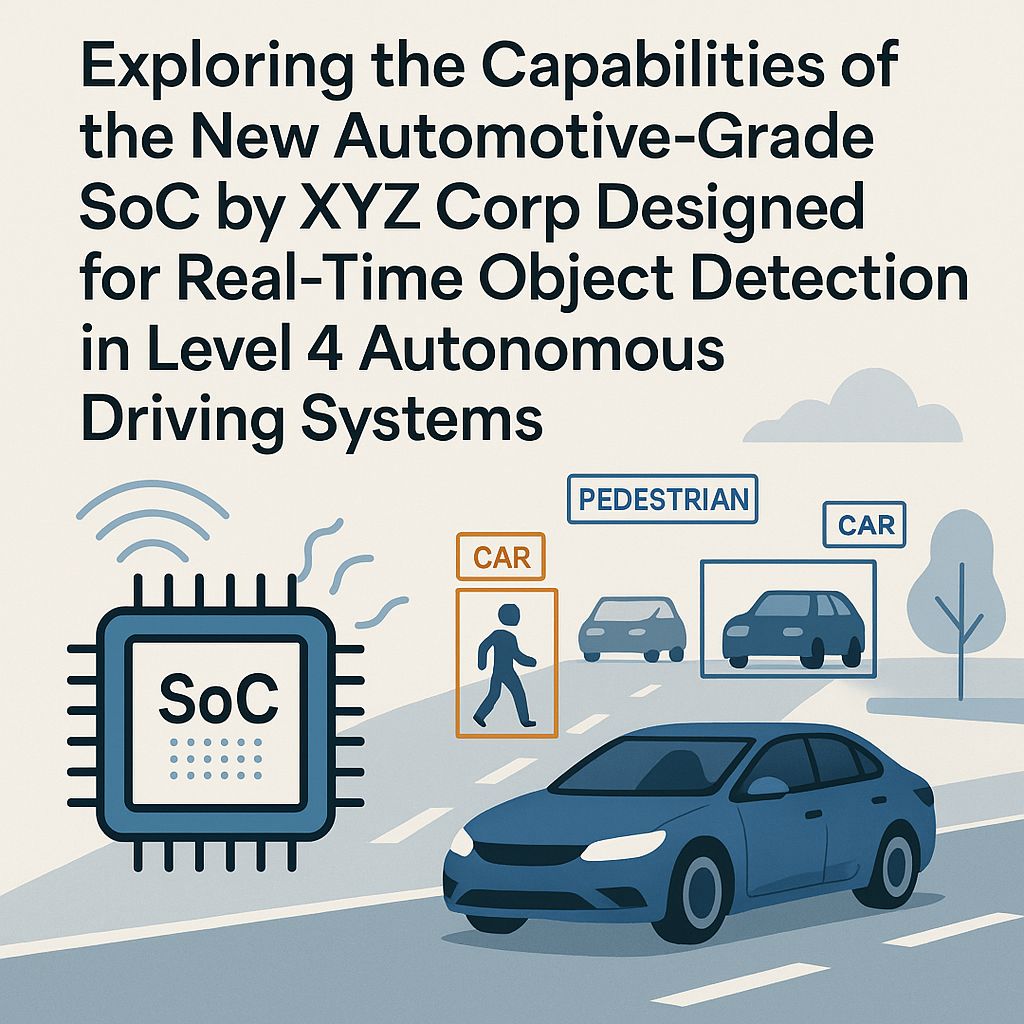
The automotive industry is rapidly evolving, particularly with the advent of autonomous driving technology. One of the latest advancements in this field is the new automotive-grade System on Chip (SoC) developed by XYZ Corp, specifically designed for real-time object detection in Level 4 autonomous driving systems. This post explores the capabilities of this innovative SoC and how it stands to transform the landscape of autonomous vehicles.
Understanding Level 4 Autonomous Driving
Level 4 autonomous driving refers to vehicles that can operate without human intervention in certain conditions. Unlike earlier levels, where human oversight is necessary, Level 4 vehicles leverage advanced technologies to handle a wide range of driving scenarios. Key features include:
- Full automation: Capable of performing all driving tasks in predefined environments.
- Complex environment handling: Can navigate through traffic, obstacles, and various weather conditions.
- System reliability: Must ensure safety and reliability in all operations, even without human input.
Key Features of the XYZ Corp SoC
The new SoC by XYZ Corp is a game-changer in the realm of autonomous driving technology. Here are some of its standout features:
- Real-Time Object Detection: The SoC employs advanced algorithms and machine learning techniques to detect and classify objects in real time, ensuring a responsive driving experience.
- High-Performance Computing: With its multi-core architecture, the SoC can process vast amounts of data from sensors and cameras simultaneously, crucial for making quick driving decisions.
- Energy Efficiency: Designed to minimize power consumption while maximizing performance, making it suitable for electric vehicles.
- Robustness: Built to withstand harsh automotive conditions, including extreme temperatures and vibrations.
- Seamless Integration: The SoC can easily integrate with various sensors such as LiDAR, radar, and cameras, providing a comprehensive view of the vehicle’s surroundings.
The Technology Behind the SoC
The underlying technology of the XYZ Corp SoC is impressive and plays a critical role in its performance. Key technological aspects include:
- Deep Learning Capabilities: Utilizes neural networks to improve object recognition accuracy over time through continuous learning from real-world data.
- Fusing Sensor Data: Combines inputs from multiple sensors to create a unified perception model of the environment, enabling better decision-making.
- Edge Computing: Processes data locally on the SoC, reducing latency and reliance on cloud computing, which is essential for real-time performance.
Impact on Safety and Reliability
Safety is paramount in autonomous driving. The XYZ Corp SoC enhances safety through:
- Redundant Systems: Incorporates multiple sensors and algorithms to ensure that even in the event of a failure, the vehicle can still operate safely.
- Continuous Monitoring: Constantly assesses the driving environment and the vehicle’s systems to detect potential hazards and respond appropriately.
- Compliance with Regulations: Designed to meet stringent automotive safety standards, reducing the risk of accidents and ensuring regulatory compliance.
Future Prospects of Autonomous Driving with XYZ Corp SoC
The introduction of the XYZ Corp SoC could pave the way for a new era in autonomous driving. With its advanced capabilities, we can expect:
- Faster Adoption of Level 4 Vehicles: As manufacturers integrate this technology, we can anticipate a quicker rollout of Level 4 autonomous vehicles on the roads.
- Enhanced User Experience: Improved object detection and decision-making capabilities will lead to a smoother and safer ride for passengers.
- Broader Applications: Beyond personal vehicles, this technology could be adapted for public transport, logistics, and delivery services, revolutionizing mobility.
Conclusion
The new automotive-grade SoC by XYZ Corp is a significant leap forward in the development of Level 4 autonomous driving systems. Its capabilities in real-time object detection, robust performance, and integration with various sensors make it a vital component for achieving safer and more reliable autonomous vehicles. As the automotive industry continues to embrace these technological advancements, the dream of fully autonomous driving is becoming increasingly attainable, promising a future where road safety and efficiency are enhanced through innovation.